Langtang Valley Trek
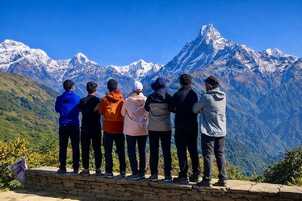
The Langtang Region lies north of the Kathmandu Valley and is home to some of the famous attractions of Nepal. Langtang valley trek starts with drive up to Syabrubesi from where we start the trek. From Syabrubesi, we start to ascend towards the Langtang Valley . Langtang valley consists of small villages, forests, stony paths and farmlands ending with the high altitude village of Kyangjin Gompa. During the trek, you will see the areas heavily affected by the 2015 earthquake and how the locals are slowly recovering from it. Overall, the Langtang Valley trail is a rewarding trek to experience the local tibetan culture, landscape, food, people and terrain. Since the Langtang region is also famous for Gosaikunda Lake and it’s Tamang Community, you can choose to customize your trek and we will make sure to give you the best possible experience in your timeframe and cost.
The Langtang Valley hike generally takes 10 days, depending on your pace and how much time you spend exploring the valley. It covers about 70 kilometers (43 miles) of varied terrain, including forested paths, rocky trails, and glacier views. The trek is considered moderate in difficulty, though some sections may feel challenging due to altitude and steep ascents. However, with proper acclimatization and a steady pace, trekkers of varying fitness levels can complete it comfortably.
In terms of cost, the Langtang Trek is more budget-friendly than other popular treks like Everest Base Camp or Annapurna Circuit. The cost of the trek usually falls between $860 and $900, covering permits, guides, meals, and accommodation. Prices vary based on the season, whether you hire a guide, and your choice of trekking packages. Despite its lower cost, the trek offers rich rewards in terms of scenery and cultural experiences, making it an excellent value for money.
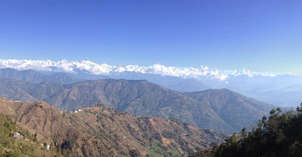
The trek is absolutely worth it for those seeking a blend of natural beauty and cultural immersion. The views of snow-capped peaks, including Langtang Lirung, coupled with visits to monasteries like Kyangjin Gompa, offer a unique window into the spiritual life of the region. Additionally, trekkers can add a side trip to Gosaikunda Lake, a sacred site, or explore the Tamang Heritage Trail, further enhancing their adventure.
The best months to trek the Langtang Valley are during the spring (March to May) and autumn (September to November). During these months, the weather is stable, the skies are clear, and the rhododendrons are in full bloom, adding vibrant colors to the landscape. Permits are required for foreign trekkers as well as Nepalese citizens to access the Langtang National Park, making it an accessible destination for both locals and tourists.
Detail Itinerary
Namaste, Welcome to Nepal! Upon your arrival, our team representative will be there to pick you up at the airport and drop you to your hotel. Later on, we will also visit the head office of Desire Adventures where you can meet your correspondent and discuss your trip further to answer any questions that you have.
We will drive towards Langtang to arrive at Syabrubesi, the start point of the trek: After Breakfast, we will catch the bus and drive for about 7-8 hours depending on the road and the traffic. If we are lucky, we can get to see the glimpse of Ganesh Himal and Manaslu on the way. The scene along the Pasang Lhamu Highway offers beautiful landscapes as we climb to an altitude of 1460m. We will also pass through local settlements like Kakani, Ranipauwa, Jurethum, Devighat, Battar, Trisuli, and Dhunche, with beautiful terrace farming and green hills. We will then stay overnight at Syabrubesi.
Meals included: Breakfast, Lunch, Dinner
Highlight: The drive from Kathmandu to Syabrubeshi includes the Pasang Lhamu highway along the mountains with brilliant terrain and spectacular views of Ganesh Himal and the peaks of Langtang region.
Today we will walk from Syabrubesi to Lama Hotel: After breakfast, we walk along the Bhote Koshi River until reaching the suspension bridge. Crossing the bridge, we walk from the south side until crossing some lodges and riversides and finally reaching Changdam (Lama Hotel). The place is originally called Changdam, but is now famously known as Lama Hotel - named after the Lama monks. We will stay overnight here in a beautiful spot amidst the forest.
Meals included: Breakfast, Lunch, Dinner
Highlight: Terraced fields, small settlement and lodges, temples. oak, maple, alder and bamboo forest along the way, the experience of suspension bridges over the roaring Bhote Koshi River.
After spending the night at Lama Hotel, we will have our breakfast and start walking towards Langtang: The walk continues through the forest following the trail along the river crossing Gumnachowk, Chhunama and Ghodatabela. From Ghodatabela, we will cross Thyngsyap village and ascend to Chamki. The trail finally leads to Langtang village. Langtang village has been completely swiped away by a massive avalanche followed by the earthquake in April 2015. The Langtang valley had been completely swiped away by the devastating earthquake of 2015. Nevertheless, the valley is picking up its pace on coming back to normality and extending tourism. It will be a new experience for you to understand the area and connect with the tibetan locals. We will stay overnight at a lodge in Langtang.
Meals included: Breakfast, Lunch, Dinner
Highlight: Oak, maple and bamboo forest, settlements like Chamki and Thyangsyap, trail accompanied by waterfalls, Langtang monastery, and Man stones, Tibetan people, culture and lifestyle of Langtang village.
Today we will trek from Langtang to Kyangjin Gompa: From Langtang, we walk across barren land that held lodges before the earthquake. Walking across the ridge and then a steady climb, we reach Mumdu and Sindum before finally ascending to the famous cheese factory from pure Yak milk near Kyangjin Gompa. The spectacular view of the Langtang Himal to the northwest will show itself including Yansa Tsenji and Kinshung lies to the north. You will stay overnight at Kyanjin Gompa.
Meals included: Breakfast, Lunch, Dinner
Highlight: Spectacular view of Langtang, Yansa Tsenji and Kinshung, cheese factory, Keynjing Gompa, and experience of thinning vegetation.
Today we will explore around Kyangjin Gompa, which has many attractions to offer at 3830m high. There are a few options for today:
- Trek to Kyanjin Ri (4773m) or Tserko Ri (5033m). Ri means 'Top' in Nepali, and thus both of these options are mountain peaks. Your guide will advise which peak is best for you to attempt, based on many factors including the weather conditions and fitness of group. Both summits give the reward of amazing panoramic views of the himalayas and a real sense of achievement at reaching the highest point of your trek!
- Yak Cheese Factory - having seen many yaks along the way, you can marvel at the production of yak cheese, which you can try at local eateries along the trail!
- Dorje Bakery - the only standalone bakery in Kyanjin Gompa, this iconic bakery serves proper coffee, warm apple pie and a variety of delicious cakes. The owner is very friendly and with a warm woodburner in the centre of the room, it is a cosy place to treat yourself!
- Rest day - go for a slow wander around the village and along the valley, to recharge before continuing the trek.
After doing one of these options, you can discuss with you guide whether to stay a second night in Kyanjin Gompa, or trek down to Langtang to stay the night there instead.
N.b. - the high altitude and weather in Kyanjin Gompa may affect what is possible for today. Your guide will be the one to make the final decision.
Meals included: Breakfast, Lunch, Dinner
Highlight: Langtang Lirung, Yansa Tsenji and Kinshung view, foot of Langtang Lirung glacier and 360 degree view of Langtang Valley from Tsergo RI, visit the Yak Cheese Factory, bakery and Kyanjin Gompa, witness the aftermath of the earthquake.
Today we will trek back down the valley. If you have stayed the night in Langtang, you will trek down to Bamboo. Or, if you have stayed the night in Kyanjin Gompa, you will trek down to Lama Hotel. This follows the same route as the ascent, so you can enjoy a last glimpse of the mountains surroung youenjoy passing through the beautiful Tamang villages like Langtang Village, Thyangyap Village, Ghodatabela who all share Tibetan culture. You will stay overnight at Lama Hotel or Bamboo (see above).
Meals included: Breakfast, Lunch, Dinner
Highlight: Tamang culture and lifestyle, oak, maple and bamboo forest, last look at the beautiful major himalayan peaks.
On the last day of the trek we walk back to Syabrubesi. We retrace the route followed earlier through Rimche, cross a suspension bridge over the Langtang River and then walk all the way through the forest towards Syabrubeshi passing the remains of the hotels from the earthquake and the process of rebuilding hotels and inns. We will spend our last day among the mountains at Sybrubesi and catch the bus to Kathmandu tomorrow. You will stay overnight at Sybrubesi.
Meals included: Breakfast, Lunch, Dinner
Highlight: Terraced fields, oak, maple, alder and bamboo forest, the experience of suspension bridges and celebrating finishing the trek!
On the 10th day, we officially come to an end of the trek. From Sybrubesi, we catch the bus to Kathmandu. The bus drives through the Pasang Lhamu Highway amidst the small settlements and scenic views. The bus takes 9 hours to reach Kathmandu. Upon arriving on Kathmandu we will check in to our hotel. Later in the evening after freshening up, youwill be invited for a farewell dinner where you can discuss on the trek and give us honest feedback. Furthermore, if you want to extend the trip, we are here to customize and plan your trip.
Our team representative will drop you off in the airport. Thank you for choosing Desire Adventures and have a safe onward journey. Namaste!
What's included
- Airport pick up and drop off by private vehicle
- 2 nights accommodation with breakfast in Kathmandu (Tourist Star Standard Hotel) on a twin-sharing basis
- Three meals a day (Breakfast, Lunch, Dinner) during the trek
- Seasonal fruit after every dinner, during the trek
- Accommodation during trek (lodge/tea house)
- 5 nights en-suite rooms, 2 nights shared bathroom rooms during the trek
- 5 hot shower during the trek
- Trekking permits
- Kathmandu- Sybrubesi- Kathmandu transport by public bus
- Gov. licensed and well trained English speaking guide and his entire expenses
- A porter (One porter per 2 people) and his entire expenses
- Insurance of Guide and Porter
- All required local tax and Gov tax
- Down jackets and sleeping bags (Rental basis if required)
- Company duffel bag
- Trekking Map
- Adventure certificate upon completion of the trek
- Free coordination in emergency cases
- Farewell dinner
What's Excluded
- Nepal arrival visa
- Meals in the city (except breakfast and above mentioned special dinner)
- Your personal nature expenses eg. Mineral water, Beer, Coke, tea/coffee and entire beverage etc
- Travel insurance that covers trip cancelation and Helicopter evacuation
- Accommodation and meals in Kathmandu in case of early return from the trek
- Tips and any other extending trips and accommodation
Clothing
- Quick drying thermals
- Trekking shirts (short sleeve)
- Liner socks
- Woolen socks
- Ankle Boots
- Trekking pants (convertible shorts)
- Fleece sweaters
- Wind/rain proof jacket and pants
- Down jacket
- Cap/Hat
- Buff/Headband
- Gloves
- Trekking boots
- Slippers
Gear
- Headlamp
- Sleeping bag
- Watch with alarm/ Altitude radar
- Sunglasses
- Camera
- Portable Charger
Extras
- Energy Bars
- Tea Bags
- Chocolate (a must!)
- Trail mix and peanuts
- Journal
- Book to read in the evenings
- Toiletries
First Aid
- Diamox – for altitude
- Sunscreen
- Chapstick
- Immodium for diarrhea
- Bandaids
- Blister bandaids or moleskin
- Eye drops
- Advil cold and dinus
- Nasal moisturizer – altitude causes nasal cavities to be very dry, nasal moisturizer was very helpful.
- Q-tips
- Tweezers
- Vicks Vapor rub
*Langtang Region was the most affected area to be hit by the 2015 Nepal Earthquake. The walls and houses were reduced to nothing and many people (both locals and trekkers) lost their lives. The area is slowly coming back to normality. We ask you to bear in mind that the trek will only be a glimpse of what really happened in the earthquake. We ask you to stay with your team leader at all times and ask him if you require any help.
Best travel seasons: Spring (March, April, May) and Autumn (September, October, November) are the best seasons; however, Langtang can be visited at any time of the year.
Communication Facilities
Postal, Freight and Cargo Services:
The Central Post office is located in Kathmandu near NTC Building in Newroad. It is open Monday to Friday. The opening and closing time from Monday to Thursday is 10:00 am and 5:00 pm respectively; however, on Friday the office is closed after 3:00 pm. Stamps, aerogram and postcards can be purchased from 7:00 am to 7:00 pm. You can enjoy the services like registration and insurance of mail and packages and IRCs exchange. Large parcels are handled by the Foreign Post Office, which is open Monday to Friday 9:00 am to 5:00 pm. Express Mail Service (EMS) is available at GPO and at Thamel, Basantapur and airport postal counters. Postal counters are also situated at the airport in Kathmandu.
Telephone Services:
Both landline and mobile phone services are available in Nepal. Nepal Telecommunication Corporation located at Tripureshwor is a national service provider that provides telephone, fax, telex, STD, ISD and telegraph services. Some private sectors also provide telephone services. Network coverage is good throughout Nepal except in some rural Himalayan places. Almost all the hotels and private communication sectors provide long distance telephone and fax facilities. During your stay in Nepal, you can buy and use a local SIM card. (requires 2 passport size photos and passport visa copy to purchase the SIM).
The country code for Nepal is 00977 and the area code of Kathmandu is 01. For other inquiries regarding the telephone number 197 can be used. Long distance call rates can be quite expensive; therefore, it is best to use the internet phone. Internet phones are easily accessible in the major cities of Nepal.
Internet Services:
Email and Internet services are very popular in most part of the country these days. All you need to do is find an internet café. Most of the hotels in the major cities of Nepal provide internet service for the convenience of their guests. The rates in the cities are much lesser compared to the rates in the rural areas. Most of these internet cafes also provide fax, and photocopy.
Local Transportation
Apps like Maps.me and Google Maps will navigate through a lot of landmarks and streets. Most urban areas in Nepal are mapped out good enough to find your way.
For offline navigation you can use a free Kathmandu Valley map that is available at the Tourist center of the Nepal Tourism Board and several tourist accommodations. Detailed maps are available in map and book shops in the big tourist areas of Nepal. Most Nepalese in the capital and other major cities know English so language barrier will not be a problem.
There are Taxis with black license plate for private transportation (private taxis may charge slightly higher. No tip is expected) and local transportation like public buses, micro buses and tempos (3-wheelers) running around the city. You could even try rides on local rickshaws, ponies or bullock-carts where they're available. Government run green buses known as Sajha Bus are comfortable and run along the north-south and east-west main roads of the valley. The bus also runs through the insides of the Airport and goes to Thamel. Let the bus conductor know your destination and you will be dropped on the alley that leads you to Thamel. You can also get navigations on your mobile map app to know where you are heading.
Mountain bikes and ordinary bicycles are cheap and the best form of transportation for economy tourists. One can hire them at Thamel, Rani Pokhari and Jhochhen, all in Kathmandu. Mountain bikes can also be hired in Pokhara, Lumbini and Chitwan.
Tourist bus service provides easy transportation to prime areas like Pokhara and Chitwan. For other destinations, long distance day or night bus services are available from Kathmandu to all major cities. Out-of-valley bound buses leave from New Bus Park at Gongabu at Ring Road near Balaju, Kathmandu.
Nepalese Currency and Exchange
Nepal has modern banking facilities and some of the International Banks have their own offices in Kathmandu. Almost all foreign currencies along with credit cards such as American Express, Visa and Master Card, etc. are accepted in Nepal at major hotels, shops and restaurants. Most ATMs will accept Visa and Master Cards. Banks are open 9 am to 3 pm Sunday through Thursday and 9 am to 1 pm on Friday.
Medical Facilities
It is very easy to find a hospital or a private clinic in the Kathmandu Valley. In fact, Nepal’s top general hospitals and private clinics are located in Kathmandu. These hospitals and private clinics provide top quality service. Other major cities also have a good number of general hospitals. However, in the rural areas of Nepal, health posts have been set up by the government to provide health and medical facilities for both local and visitors. All kinds of medicines are available in Kathmandu.
For the reduction of deaths among trekkers, an association named Himalayan Rescue Association (HRA) was founded in the year 1973. The head office of HRA is located in Lazimpat near the north gate of the Palace Museum. During peak season, it operates aid posts in Pheriche (Khumbu region) and Manang (Annapurna region) managed by expatriate physicians. However, its main job is to provide free advices to trekkers on altitude sickness, equipments and the condition of trekking routes.
Vaccination and Medicines
Although you will be consulting your doctor before planning the trip, we highly recommend you to get few vaccinations like Hepatitis A, Japanese Encephalitis, Polio, Rabies, Tetanus, Typhoid and Malaria before planning your trip to Nepal.
Moreover, we also recommend you to carry few medicines like Aspirin or Panadol –for pain and fever; Antihistamine – as a decongestant for cold allergies and to prevent motion sickness; Antibiotics, Kaolin preparation (Pepto-Bismol), Imodium or Lomotil – for upset stomach; Rehydration mixture- for the treatment of severe diarrhea; Antiseptic, Mercurochrome and antibiotic powder or similar dry spray – for cuts and grazes; Calamine lotion for irritation from bites or stings; bandages, band aids, a pair of scissors, tweezers - for minor injuries; insect repellent, sun block lotion, lip balms, water purification tablets, throat lozenges, moleskin, Sulamyd 10% eye drops, and Acetaminophen (Paracetamol, Antacid tablets).
Health, fitness and experience requirements
Every trekker is suggested to consult their doctor before planning this trek since Langtang trekking trails demand excellent stamina, tough determination and the best health condition. It is highly recommended to take expert guidance from local General Practitioner (GP) regarding the required guide walks. Travel clinics can offer the best assistance in absence of GP. Some days of the trek require 8-9 hours of walking. Regular exercise and jogging is recommended to build up the required stamina to successfully climb the peak.
Travel Insurance
If you are planning this trip in Nepal, a travel insurance policy that covers all the added expenses that might result due to various health issues, injuries or accidents. Moreover, it should also cover death, misplaced luggage, theft and liability, cancellations, medical treatment (including hospital charges, cost of medicine, doctor’s fees) as well as repatriation cost. It is also necessary to ensure that the insurance policy covers all extra activities that you are planning to accomplish throughout your stay in Nepal.
Visa Information
It is very easy to obtain Nepal’s visa. You may either apply for a visa at your nearest Nepalese Embassy/Consulate or Mission offices in your own country or you can buy this upon your arrival at Tribhuvan International Airport in Kathmandu. To apply for a visa, you need 2 passport size photographs, Visa fees in US dollars and your passport that is valid for at least 6 months before the trip. However, nationals of SAARC countries (India, Bhutan, Sri Lanka, Pakistan, Bangladesh, Maldives and Afghanistan) and China do not require any visa to visit Nepal. Transit visa for foreign nationalities is only provided for 3 days. Therefore, visa is required for longer stays. However, for the convenience or foreign nationals, a visa is also provided from the borders listed below:
Tribhuvan International Airport (Kathmandu)
Kakarvitta, Jhapa (Eastern Nepal)
Birgunj, Parsa (Central Nepal)
Kodari, Sindhupalchowk (Northern Border of Nepal)
Belhiya, Bhairahawa (Western Nepal)
Jamuna, Nepalgunj (Mid Western Nepal)
Mohana, Dhangadhi (Far Western Nepal)
Gaddachauki, Mahendranagar (Far Western Nepal)
Tourist Visa Fees:
Transit visa (3 days) – Free of cost
Multiple entry (15 days) – 30 USD or equivalent convertible currency
Multiple entry (30 days) – 50 USD or equivalent convertible currency
Multiple entry (90 days) – 125 USD or equivalent convertible currency
(For more information, please contact the Department of Immigration, Kalikasthan,Dillibazar, Kathmandu.
Tel: 00977-4433934, 4429660, 4438862, 4438868. You can also download visa form from – www.immi.gov.np)
We are able to depart Langtang Valley Trek every day at no extra cost. So kindly choose your own date as per your convenient. Contact us to schedule your own departure Date
* Cost Based on minimum 2 Pax
| Start Date | End Date | Status | Cost* | Book Trip |
|---|
| Start Date | End Date | Status | Cost* | Book Trip |
|---|
| Start Date | End Date | Status | Cost* | Book Trip |
|---|
| Start Date | End Date | Status | Cost* | Book Trip |
|---|
| Start Date | End Date | Status | Cost* | Book Trip |
|---|
| Start Date | End Date | Status | Cost* | Book Trip |
|---|
| Start Date | End Date | Status | Cost* | Book Trip |
|---|
* Cost Based on minimum 2 Pax
| Start Date | End Date | Status | Cost* | Book Trip |
|---|
| Start Date | End Date | Status | Cost* | Book Trip |
|---|
| Start Date | End Date | Status | Cost* | Book Trip |
|---|
| Start Date | End Date | Status | Cost* | Book Trip |
|---|
| Start Date | End Date | Status | Cost* | Book Trip |
|---|
| Start Date | End Date | Status | Cost* | Book Trip |
|---|
| Start Date | End Date | Status | Cost* | Book Trip |
|---|
| Start Date | End Date | Status | Cost* | Book Trip |
|---|
| Start Date | End Date | Status | Cost* | Book Trip |
|---|
| Start Date | End Date | Status | Cost* | Book Trip |
|---|
| Start Date | End Date | Status | Cost* | Book Trip |
|---|
| Start Date | End Date | Status | Cost* | Book Trip |
|---|
.jpg)
I was planning a last minute trek and got lucky to come across Desire Adventures! They made the process seamless and I was made to feel very comfortable and safe throughout the journey. Prakash & Dan were well informed, experienced and great fun, can’t recommend them enough!
Read More

An often underrated trekking region in Nepal, Langtang Valley has it all. Beautiful scenery, excellent trekking routes, comfortable tea houses, great food, and wonderful people. It is also quieter than the ever-popular Everest and Annapurna regions.
Desire Adventures was fantastic. From the moment I booked the trek, all Read More
Why Desire Adventures?
- Exceptional Product Knowledge
- Fair Price and Service Quality Guaranteed
- Guaranteed Departure on each booking
- Ultra-personalized itinerary and Unmatched Flexibility:
- We Maintain 1:5 Guides:clients Ratio
Tripadvisor

Book
We Accept